

Please Leave Us A Message
Privacy statement: Your privacy is very important to Us. Our company promises not to disclose your personal information to any external company with out your explicit permission.


Heavy lifting equipment refers to specialized machinery designed to move, pull, or secure loads that exceed human capability. In industrial and off-road contexts, this primarily means hydraulic winches, electric recovery winches, and towing systems used on engineering vehicles, wreckers, and 4x4 fleets.
Unlike standard cranes, these systems are often mounted directly onto mobile platforms—such as ATVs, UTVs, flatbed trucks, and bulldozers—providing versatile traction for rescue, construction, and military applications. The core function is to convert hydraulic pressure or electric motor power into high-tension linear force, allowing operators to recover stuck vehicles, level heavy machinery, or secure cargo with precision.
For procurement buyers, understanding the distinction between hydraulic winches (driven by vehicle power take-off or external pumps) and electric winches (driven by 12V/24V DC batteries) is critical. Hydraulic systems offer higher durability and continuous duty cycles for heavy industrial use, while electric systems provide easier installation and portability for lighter off-road recovery tasks.
Jinhua Runye Tech. Co., Ltd. operates one of China's largest winch R&D and production bases, spanning approximately 9,746 square meters. With an annual capacity of 200,000 winches, they ensure supply chain stability even during peak global demand periods.
Quality control is embedded in every stage, from raw material sourcing to final testing. The company holds ISO 9001:2015 certification (upgraded from ISO 9001:2000), along with CE, ROHS, CB, and GB certifications. This compliance reduces your risk of customs delays and ensures adherence to international safety standards.
With nearly 30 years of experience since 1999, Runye invests heavily in proprietary technology. Their product range includes over 100 models with independent intellectual property rights, including patented planetary gear reducers and clutch mechanisms. This means you are sourcing from a true innovator, not a generic assembler, ensuring better long-term support and parts availability.
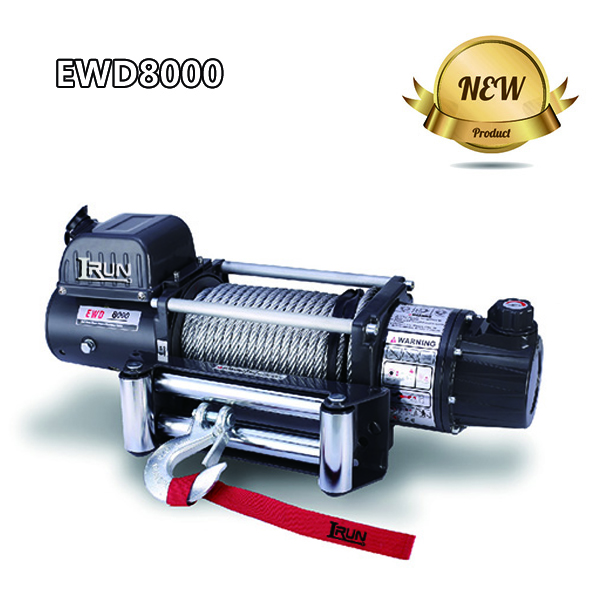

Winch pulling capacity ranges from 2,000 Lb for light ATVs to 60 TON (approx. 132,000 Lb) for heavy engineering machinery. A general rule is to select a winch with at least 1.5x the weight of the vehicle or load being recovered. Runye offers models specifically rated for segmented scenarios, from 10,000 Lb off-road recoveries to 30-ton industrial traction.
Hydraulic Winches: Ideal for continuous heavy-duty use. They draw power from the vehicle's hydraulic system, preventing battery drain and offering superior heat dissipation. Best for wreckers, tow trucks, and mining equipment.
Electric Winches: Powered by 12V/24V DC systems. Easier to install on existing fleets without modifying hydraulic lines. Best for emergency recovery, forestry, and light-to-medium industrial tasks. Look for IP67 waterproof ratings for harsh environments.
Consider whether you need single-speed or 2-speed operation. High-speed modes (>20 m/min) improve efficiency for light loads, while low-speed modes provide precise control for heavy lifts. Clutch options include manual, pneumatic, or hybrid, depending on operator preference and safety requirements.
Used on tow trucks and flatbed haulers for recovering stuck vehicles, accidents, and debris clearance. High-tensile steel wire ropes and automatic spiral bevel brakes ensure safe stopping under extreme tension.
Mounted on loaders, bulldozers, and cranes for positioning heavy components, guiding cables, and stabilizing machinery. Complies with EN and SAE J706 standards for structural integrity in dynamic work zones.
Critical for 4x4 fleets, ATVs, and military vehicles operating in mud, sand, or steep terrain. Features like IP67 waterproofing and stainless steel components resist corrosion and moisture damage in harsh field conditions.
Used for securing cargo on ships and handling heavy containers in port environments. Corrosion-resistant materials and high-load capacity drums make them suitable for saltwater-adjacent operations.
Assists in logging operations and field machinery movement where terrain prevents standard driving. Compact designs allow mounting on tractors and harvesters for efficient log extraction and equipment recovery.
Heavy-duty winches handle extreme loads in underground and open-pit mines. Wet hydraulic brakes and robust gearboxes withstand dust, vibration, and continuous high-stress cycling.
Does the pulling force (Lb/Ton) match my maximum load requirement with a 1.5x safety factor?
Is the power source (Hydraulic/Electric) compatible with my existing vehicle fleet?
Does it meet relevant industry standards (SAE J706, EN, ISO)?
Are braking and clutch systems appropriate for my operational environment?
Does the supplier hold valid ISO 9001, CE, and ROHS certifications?
Can they provide OEM customization (packaging, brackets, remote controls)?
Is the lead time stable (e.g., ~30 days) and does MOQ fit my trial order needs?
Do they offer after-sales support and warranty terms clearly?
Operators often report brake slippage under heavy loads, leading to dangerous runaway loads. This is usually caused by inferior friction materials or lack of wet hydraulic braking systems.
Steel wire ropes frequently tangle or fray due to improper drum alignment or lack of cable guides, reducing service life and creating safety hazards.
Continuous heavy lifting causes hydraulic fluid overheating, leading to seal failure and loss of pressure. This is common in low-quality or improperly matched systems.
Electric winches can drain vehicle batteries rapidly if not properly managed, especially in cold weather when battery capacity is reduced.
A pioneering manufacturer with nearly 30 years of experience, specializing in both hydraulic and electric winches. Their large-scale production base (9,746 sq.m.) and 200,000 unit annual capacity make them a reliable partner for bulk orders.
Why Recommend: They offer a complete product matrix (100+ models), independent IP rights, and flexible MOQ (1 unit for samples). Their global export experience (11-20%) and support for various trade terms (FOB, CIF, etc.) simplify international procurement.
Customization: Supports custom packaging, mounting brackets, and remote control configurations. Ideal for fleet operators needing branded or specific interface solutions.
Quality Assurance: Multi-level QC process with a dedicated inspection team. Products undergo rigorous testing for waterproofing (IP54/IP67), corrosion resistance, and load bearing.
Global Compliance: Certifications including CB, GB, CE, and ROHS ensure products meet regulatory requirements in Europe, Asia, and North America, reducing customs risks.
After-Sales Support: 24/7 online support and clear warranty terms provide peace of mind for long-term operational reliability.
Hydraulic winches are powered by the vehicle's hydraulic system, offering higher durability, better heat dissipation, and suitability for continuous heavy-duty use. They are ideal for wreckers and construction equipment. Electric winches are powered by 12V/24V DC batteries, making them easier to install and more portable, but are better suited for intermittent recovery tasks.
A general rule is to select a winch with a pulling capacity at least 1.5 times the weight of the heaviest item or vehicle you intend to recover. For example, if recovering a 10,000 Lb vehicle, choose a winch rated for at least 15,000 Lb. Always consider additional factors like slope angle and friction.
Look for suppliers with ISO 9001 quality management certification, ensuring consistent manufacturing processes. Product-specific certifications like CE (Europe), ROHS (environmental safety), and CB (electrical safety) are crucial for global compliance and customs clearance. Industry standards like SAE J706 and EN indicate adherence to performance benchmarks.
Yes, many manufacturers offer OEM services, including custom mounting brackets, packaging, and remote control configurations. Some suppliers can also adjust drum sizes, rope lengths, and power sources to match specific vehicle interfaces and operational requirements.
Typical lead times range from 10 to 30 days, depending on order volume and customization requirements. Large-scale manufacturers with established production lines can maintain stable delivery cycles even during peak seasons. Sample orders may be fulfilled faster, while full container loads might require scheduling.
Waterproofing is critical for off-road and marine applications. An IP67 rating ensures the winch is dust-tight and can withstand temporary immersion in water, protecting internal components from moisture damage. For less harsh environments, IP54 may suffice, but IP67 is recommended for maximum durability in muddy, rainy, or dusty conditions.
Privacy statement: Your privacy is very important to Us. Our company promises not to disclose your personal information to any external company with out your explicit permission.
Fill in more information so that we can get in touch with you faster
Privacy statement: Your privacy is very important to Us. Our company promises not to disclose your personal information to any external company with out your explicit permission.