

Please Leave Us A Message
Privacy statement: Your privacy is very important to Us. Our company promises not to disclose your personal information to any external company with out your explicit permission.


A wireless remote electric trailer winch is a motorized pulling device that uses an electric motor to wind a steel cable onto a drum, enabling you to load and unload trailers, boats, or heavy equipment without manual effort. The defining feature is the wireless handheld remote control, which lets you operate the winch from a safe distance — up to 30 meters away — giving you full visibility of the load path and eliminating the need to stand next to a moving cable.
These systems are widely used in towing operations, marine applications, off-road recovery, and industrial material handling. By replacing traditional wired pendants with radio-frequency remotes, operators gain flexibility, safety, and efficiency. Modern wireless remote electric trailer winches integrate limit switches, overload protection, and weather-resistant housings, making them reliable for both indoor workshops and outdoor job sites.
Whether you manage a fleet of flatbed trucks, run a marine dealership, or coordinate emergency recovery operations, a wireless remote electric trailer winch reduces labor costs, minimizes injury risk, and speeds up your daily loading cycle. Understanding how these systems work helps you select the right capacity, mounting configuration, and control range for your specific application.
Quality is embedded into every stage of the manufacturing process at Jinhua Runye Tech. Co., Ltd. As one of China's pioneering vehicle winch manufacturers since 1999, the company operates a dedicated R&D and production base spanning approximately 9,746.1 square meters with 10 production lines capable of delivering 200,000 winches annually.
This scale translates directly to procurement buyers: consistent batch quality, predictable lead times, and the ability to fulfill large-volume orders without compromising on inspection rigor. Every unit undergoes multi-level quality checks across R&D, design, and assembly phases, backed by a professional QC team of 5–10 dedicated inspectors.
The company holds ISO 9001:2000 and ISO 9001:2015 certifications, along with CE and ROHS product certifications. Core products carry independent intellectual property rights, ensuring proprietary gear designs, clutch mechanisms, and brake systems that differentiate from generic competitors. All products come with warranty coverage, providing long-term reliability assurance for fleet operators and distributors.
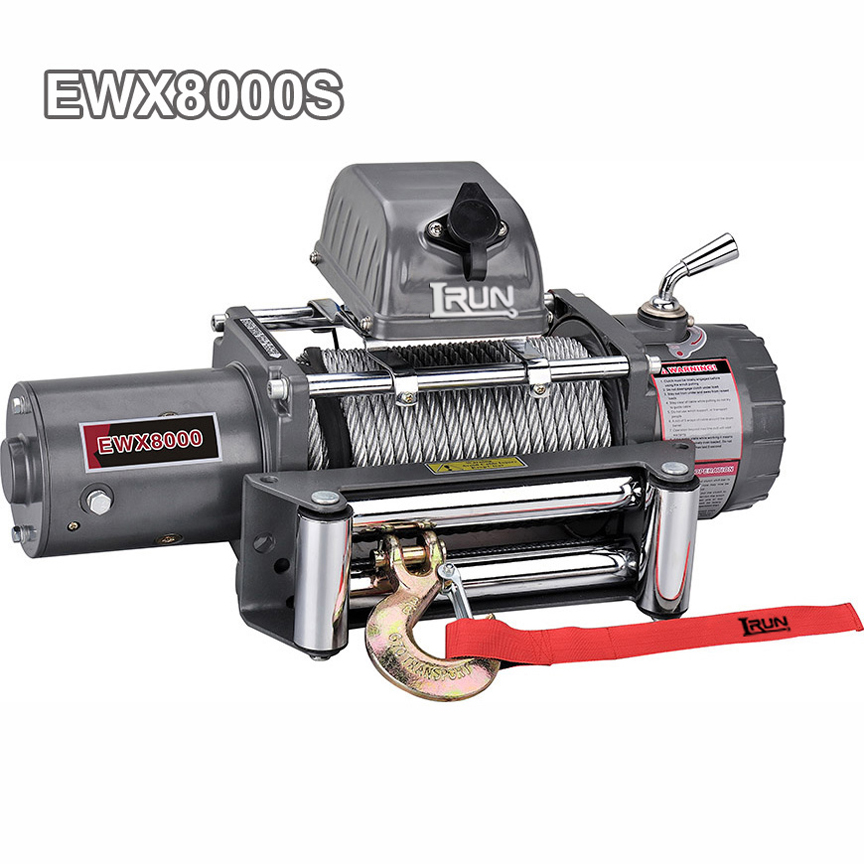

Selecting the correct wireless remote electric trailer winch requires matching several technical parameters to your operational demands. Start with pulling capacity: choose a winch rated at least 1.5× the maximum weight you plan to pull. For a 3,000 kg trailer, a 6,600 Lb (3,000 kg) minimum-rated winch provides a safety margin against dynamic loads and incline resistance.
Power source compatibility is the next critical factor. Most electric trailer winches operate on 12V or 24V DC systems. Verify that your vehicle's electrical system can support the winch's peak current draw without voltage drop. Undersized wiring causes performance loss and premature motor failure — always use manufacturer-specified cable gauges.
Control range and frequency reliability determine operational convenience. Wireless remotes typically offer 10–30 meter ranges with anti-interference technology. Ensure the remote has a durable rubber housing for weather resistance and intuitive forward/reverse/pause controls. Some models include automatic limit switches that stop the winch when the cable is fully wound, preventing overwinding damage.
Mounting dimensions and duty cycle complete the selection matrix. Standard mounting bolt patterns such as 10″ × 4.5″ (254mm × 114.3mm) ensure compatibility with existing trailer frames. For continuous-duty applications like construction site material handling, specify winches rated for sustained operation rather than intermittent duty only.
Use this checklist to evaluate suppliers and compare winch models before placing bulk orders. Each item addresses a common procurement risk point.
| Parameter | Recommended Specification |
|---|---|
| Pulling Force | 2,000 Lb – 50,000 Lb (select based on load) |
| Voltage | 12V DC or 24V DC |
| Gear Reduction | 2-stage or 3-stage planetary gearbox |
| Brake Type | Automatic spiral bevel brake |
| Cable Type | Steel wire rope (standard), synthetic optional |
| Waterproof Rating | IP54 minimum, IP67 preferred for outdoor |
| Mounting Pattern | 10″ × 4.5″ (254mm × 114.3mm) standard |
| Remote Range | 10–30 meters RF control |
Procurement buyers frequently encounter issues that increase total landed cost or delay project timelines. Recognizing these problems upfront helps you avoid costly mistakes during supplier evaluation.
Some suppliers advertise peak pull ratings that assume ideal conditions with no friction, incline, or dynamic load. Always request the rated working load and verify it against SAE J706 or equivalent standards. A winch rated at 12,000 Lb peak may only handle 6,000 Lb under real-world conditions.
Low-quality RF remotes suffer from interference, limited range, or signal dropout in metal-rich environments like truck yards. Ask about frequency band (typically 27 MHz or 433 MHz), anti-collision coding, and whether the remote includes a physical kill switch for emergency stop.
Missing or inadequate fairleads and cable guides cause uneven spooling, which leads to cable crushing, reduced lifespan, and potential snap hazards. Ensure the winch includes a roller or spinner fairlead and that the drum has proper cable layering ridges.
Cheaper winches use thin-gauge internal wiring and low-amperage contactors that overheat under sustained load. Request details on solenoid rating, contactor amperage, and whether thermal overload protection is built into the motor circuit.
When a seal kit, gear set, or remote battery fails months after purchase, sourcing replacements becomes difficult if the supplier doesn't maintain a parts inventory. Confirm spare parts catalog availability and typical shipping time for replacement components.
Some warranties cover only manufacturing defects but exclude wear items like brushes, seals, or cables. Read the fine print carefully. A comprehensive warranty should cover motor, gearbox, and electronic controls for at least 12 months from shipment date.
Wireless remote electric trailer winches serve diverse sectors where reliable, hands-free pulling power is essential. Their versatility stems from standardized mounting interfaces, scalable capacity options, and robust environmental sealing.
Flatbed tow trucks and wrecker operators use trailer winches to load disabled vehicles quickly and safely. The wireless remote allows the operator to guide the vehicle onto the deck from a clear vantage point, reducing repositioning time and improving crew safety.
Boat dealerships and marinas deploy trailer winches for launching and retrieving vessels. Corrosion-resistant stainless steel components and IP67-rated remotes withstand saltwater exposure, while smooth speed control prevents hull damage during docking.
Equipment transporters use high-capacity trailer winches to move generators, compressors, and modular buildings. Continuous-duty models with 2-speed gearboxes handle both rapid positioning and precision final placement of heavy loads.
Military vehicles, ATVs, and UTVs rely on compact electric winches for self-recovery in mud, sand, and steep terrain. Lightweight models under 50 kg with IP67 protection provide dependable extraction capability in extreme environments.
Farm trailers and grain carts benefit from electric winches for unloading bulk materials and managing heavy implements. Simple 12V operation integrates easily with tractor PTO systems, and rugged construction handles dust and vibration.
Distribution centers use trailer winches for loading palletized goods onto flatbed trailers and container platforms. Electric models eliminate hydraulic fluid leaks, keeping warehouse floors clean while providing precise load positioning.
Choosing the right manufacturing partner matters as much as selecting the right product. Evaluate suppliers using the following criteria derived from industry best practices and verified company data.
Jinhua Runye Tech. Co., Ltd. has operated since 1999, accumulating nearly 30 years of specialized experience in vehicle winch R&D and manufacturing. This longevity signals financial stability, supply chain maturity, and deep domain expertise that newer entrants cannot replicate.
With 10 production lines and 200,000 annual units, the manufacturer can handle both small-batch OEM orders and large distributor contracts without sacrificing quality. This scale ensures consistent supply even during peak seasonal demand periods.
Look for suppliers offering custom packaging (export cartons, pallets), branded mounting brackets, and tailored technical documentation. Jinhua Runye supports customer-designed packaging and bracket fabrication, reducing your integration costs and time-to-market.
Export-oriented suppliers understand FOB, CFR, CIF, and EXW terms, plus payment methods like L/C and T/T. Products carrying CE, ROHS, CB, and GB certifications meet European, North American, and Asian regulatory requirements, simplifying cross-border procurement.
Select a winch with a rated capacity of at least 1.5× your maximum load weight. For example, a 4,000 kg trailer requires a minimum 8,800 Lb rated winch. This safety margin accounts for incline resistance, wind load, and dynamic forces during acceleration. Jinhua Runye offers models ranging from 2,000 Lb to 50,000 Lb to cover light utility trailers through heavy industrial applications.
Yes, provided the winch and remote carry an adequate IP rating. Models with IP54 protection resist water jets from any direction, while IP67-rated units can withstand temporary immersion. Stainless steel external components further prevent corrosion in marine or de-icing salt environments. Always verify the IP rating before purchasing for outdoor deployment.
Standard production cycles range from 10 to 30 days depending on order volume and customization level. Sample orders ship within 3–5 business days. Bulk orders of 100+ units may require 20–30 days for production plus additional time for freight forwarding. Suppliers committed to transparent communication will provide weekly production updates throughout the manufacturing period.
Installation requires connecting the winch directly to the vehicle's battery via heavy-gauge cables (typically 2/0 AWG for 12V systems) and routing the remote control antenna within the cabin. Most electric winches operate on standard 12V or 24V DC automotive electrical systems. Professional installation is recommended to ensure proper fuse protection, grounding, and cable routing away from moving parts.
Reputable manufacturers provide a minimum one-year warranty covering motor, gearbox, brake system, and electronic controls. Some extend coverage to two years for structural components. Warranties typically exclude consumable items like steel cables, remote batteries, and fuses. Jinhua Runye offers warranty service backed by their engineering team, with spare parts shipped within 5–7 business days for covered failures.
Yes. Many manufacturers, including Jinhua Runye, offer custom bracket fabrication services. Provide your trailer frame dimensions and mounting hole pattern, and the engineering team will design a compatible bracket. Standard mounting patterns like 10″ × 4.5″ fit most trailers, but custom configurations accommodate non-standard chassis designs. Custom brackets typically add 5–7 days to the production timeline.
A 2-speed gearbox provides a high-speed mode for rapid cable retrieval during light-load positioning and a low-speed mode for controlled, high-traction pulling under heavy loads. High-speed mode can exceed 20 meters per minute of rope retrieval, while low-speed mode multiplies torque for demanding recovery scenarios. This dual-mode capability eliminates the need to carry two separate winches for different tasks.
Privacy statement: Your privacy is very important to Us. Our company promises not to disclose your personal information to any external company with out your explicit permission.
Fill in more information so that we can get in touch with you faster
Privacy statement: Your privacy is very important to Us. Our company promises not to disclose your personal information to any external company with out your explicit permission.